
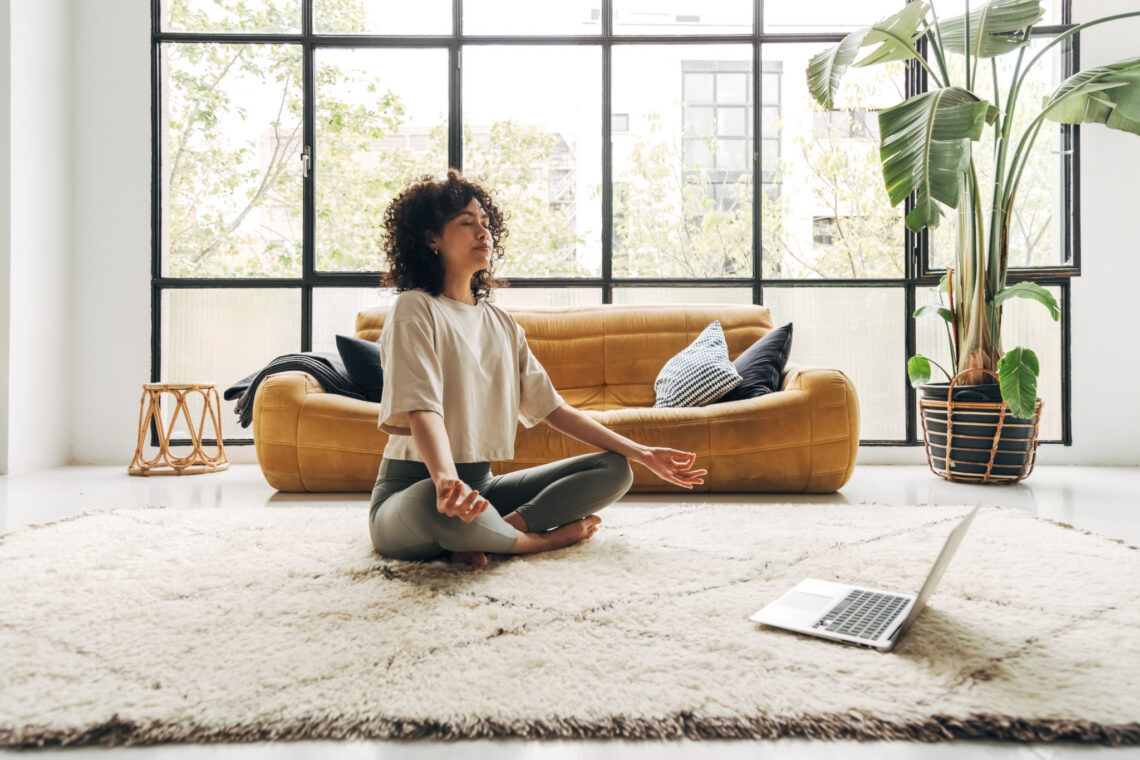
May is Mental Health Awareness Month, a time to focus on mental well-being and learn healthy ways to support it. Life can be chaotic and busy, making it important to take time to care for yourself both mentally and physically.
Mental health affects how we think, feel and behave in our day-to-day lives. Having good, supported mental health helps people handle stress, make decisions, solve problems and stay focused. Another important aspect of good mental health and well–being is that it promotes self-esteem, social interactions and the ability to find meaning in daily life.
What is Mindfulness and Meditation?
Mindfulness is the practice of being fully present and aware of your thoughts, feelings and surroundings without judgment. It’s focused on staying in the moment, listening to your breathing, encouraging you to observe your thoughts and feelings and letting them pass, rather than getting caught up in them. There are many ways to practice mindfulness; some include meditation, breathing exercises and intentional movement, such as yoga. These activities and practices can be integrated into your daily activities.
Meditation is a technique under the umbrella of mindfulness. It is a formal practice aimed at helping people stay in the moment. It urges people to focus on a specific object or thought and typically requires more time and space than other mindfulness practices.
While these two terms are different, they become intertwined as we ground ourselves and become self-aware in our lives.
What are the Benefits of Mindfulness?
Being mindful not only promotes emotional well–being and regulation, strengthens mental health and the awareness of your mind and body, but it also supports the regulation of digestion, heart rate and breathing. Mindfulness reduces stress, anxiety and depression by breaking cycles of overthinking and worry. Increase in positive emotions like happiness and content has also been seen when people implement mindfulness practices into their lives.
Techniques for Practicing Mindfulness
Mindfulness can look like many things. You can participate in a mindfulness practice that takes thirty minutes or one that takes thirty seconds. Everyone is different and resonates with a technique that fits their needs and circumstances.
Many people think of meditation as the main mindfulness practice, and while it’s extremely beneficial, there are smaller, quicker ways to be mindful throughout the day as well. Here are some techniques you can try to be more present and mindful:
Meditation – There are many different types of meditation people practice, from focusing on breathing to movement-based meditation such as yoga. One of the most common for beginners is Mindfulness meditation, which involves sitting quietly, observing and focusing on thoughts and sensations without judgment. Some people take a mindful-breathing approach, paying attention to their breath to center their minds. There are different ways to follow along with guided meditation practices on YouTube and various mobile options such as the Calm app.
Journaling is a great way for people to incorporate mindful practices into their lives. You can sit down for one minute and write down what you’re grateful for or take ten minutes to reflect on life moments or things that may be causing stress. Getting stressful thoughts and feelings onto paper and out of the mind can feel very freeing. This is a great, easy mindfulness technique to build into a habit.
Sensory grounding- This mindfulness technique helps people in stressful moments or situations by focusing on the present. Identify five things you see, four you can touch, three you hear, two you smell and one you taste. This technique helps manage anxiety by keeping you grounded and focused.
Focusing on Your Senses – Mindfulness can be as easy as slowing down and taking a moment to notice the small things in your everyday life that might otherwise go unnoticed. When taking a bite of food, focus on eating slowly and taking in each flavor. Listen to the bird’s chirping in the morning and the rustling of the wind through the trees. Look at the sunrise or sunset and notice the colors of the clouds and the sky.
When life is busy, and it feels like time is always moving faster, it’s important to slow down and appreciate the little things. Practicing mindfulness in whatever capacity feels right for each person enhances mental well-being.
Find more information and mindfulness techniques below. Follow GHC-SCW on Facebook and Instagram for some helpful practices from Behavioral Health Providers this Mental Health Awareness month.
Resources and More Mindfulness Techniques
Mental Health Awareness Month | SAMHSA
Mindfulness | Mental Health Foundation
All 42 Types of Meditation: The Complete List – Meditation Music Library
6 Reasons Mental Health Is SO Important
Behavioral Health – Group Health Cooperative of South Central Wisconsin