

Starting a conversation about memory loss with a loved one can feel overwhelming, but it’s one of the most important steps you can take to protect their health and independence. This blog will help you understand what dementia is, recognize common symptoms and approach these conversations with practical strategies and an empathetic perspective.
What is Dementia?
Dementia is the loss of cognitive function, including thinking, remembering and reasoning, to the point where it interferes with a person’s daily life and activities (National Institute on Aging). It affects millions of people globally, and about one-third of all people 85 years or older may have some form of dementia. However, dementia is not a regular part of aging. In fact, many people can live into their 90s without any signs of dementia.
Dementia ranges in its severity from when it just begins to affect a person’s functioning to the most severe stage when the person must rely upon others for basic living activities like eating or using the restroom. Some people with dementia become unable to control their emotions and elements of their personalities may change.
Dementia is used as an umbrella term to describe a range of brain conditions that worsen over time due to progressive and irreversible loss of neurons and brain function. Dementia is caused by ongoing damage to brain cells that impact their ability to communicate, which widely affects thinking, behavior and feelings. There are several different forms of dementia, including Alzheimer’s disease, which is the most common. Currently, there is no cure for any type of dementia. However, there are medications that may help slow disease progression, and that may be available from your healthcare network or local community. These medications may help promote the well-being and independence for your loved one. Therefore, it is beneficial to involve your loved one’s health care team early in the process.
Signs and Symptoms of Dementia
Symptoms of dementia occur when once-healthy neurons (nerve cells) in the brain stop working, lose connections with other brain cells and die. While everyone loses some neurons as they age, people with dementia experience far greater loss (National Institute on Aging).
Signs and symptoms vary depending on the type of dementia. They may include:
- Memory loss, poor judgment and confusion
- Difficulty speaking, understanding and expressing thoughts or reading and writing
- Wandering and getting lost in a familiar environment
- Trouble handling money responsibly or missing payments
- Repeating questions
- Using unusual words to refer to familiar objects (difficulty with word finding)
- Taking longer to complete routine daily tasks
- Losing interest in normal daily activities or events
- Hallucinating or experiencing delusions or paranoia
- Acting impulsively
- Not caring about other people’s feelings
- Losing balance, falling and other problems with movement
Signs of Age-Related Forgetfulness vs. Dementia
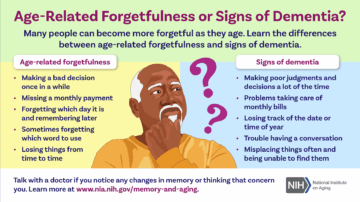
While noticing these symptoms may suggest dementia or a related condition, it is always best to seek a professional opinion from your Primary Care Provider or a geriatrician. Learn more about GHC-SCW’s exceptional primary care here: Primary Care – Group Health Cooperative of South Central Wisconsin.
Navigating Challenges for Dementia Patients and Their Families
Dementia affects every area of cognitive function; therefore, loved ones and caregivers often face complicated situations that they had not expected. Changes to daily life are usually unpredictable, as one’s needs fluctuate and behaviors can shift suddenly. These challenges can manifest in complex feelings of frustration, fear, uncertainty and confusion among both people living with dementia and their loved ones.
For more information on lifestyle challenges, read this article, “Unique Challenges Faced by Alzheimer’s and Dementia Caregivers,” published by Caring Senior Service.
How to Communicate with a Loved One about Memory Loss
If you’ve noticed behavioral changes or cognitive decline in an aging loved one, it may feel daunting to start a conversation about dementia and its symptoms. But, if you’re concerned about their safety and well-being, now is the time to act. A great place to start is with an open conversation grounded in empathy and understanding.
Here are a few strategies to help lay the groundwork for a meaningful conversation.
- Start with a gentle, compassionate tone: Talking about one’s personal health, especially potential cognitive decline, can feel like a sensitive topic. No matter how worried or frustrated you are about their behaviors or brain health, you must share your concerns in a way that resonates with your loved one. This means that your conversation should be built on a foundation of love, compassion, understanding and a nonjudgmental tone.
- Offer reassurance about future possibilities: While memory changes can be an indicator of dementia, it is not always the case. Some degree of forgetfulness is common with aging, as the brain naturally declines in size and activity. Other causes of memory issues can include dehydration, depression, drug and/or alcohol misuse, side effects of medication, social isolation and sleep problems, among other causes. It is important not to jump to conclusions, but instead to clarify which behaviors your loved one is experiencing. Encourage your loved one to visit a geriatrician or their primary care provider for a comprehensive exam, noting that their brain health is just one piece of their overall well-being.
- Emphasize prevention: Individuals experiencing dementia often have no idea it is happening. Those with mild cognitive challenges can be reluctant to acknowledge that there is an issue and might even resist seeing a specialist if they don’t believe they have any challenges. You should remind your family members that nothing needs to be “wrong” for them to visit a health care provider. In fact, professional care providers can help identify potential problem areas before they become larger issues. According to geriatric medicine physician Ardeshir Hashmi, MD, “Prevention is the key word. And in terms of successful aging, you can never start too early” (Cleveland Clinic).
- Offer support and focus on the positives: During this difficult conversation, it can be helpful to focus your discussion on what’s most important: ensuring your loved one’s long-term independence and confidence as they age. Phrases that define your loved one’s end goal can help guide the conversation toward potential next steps rather than focusing on past struggles (see the next section for examples). Invite your loved one to share their own perspective with open-ended questions like “How have you been feeling lately?” I’ve noticed you’ve had some trouble remembering your medications.” Simply asking about their experiences can help you identify where they may be struggling and decide on the following steps to ensure your loved one’s long-term independence.
Consider potential next steps: Once you’ve opened the conversation, talk about what comes next. Emphasize that you want your loved one to feel confident, capable and prepared for any changes ahead. Reassure them that you will navigate this process together, focusing on seeking support instead of adding restrictions. Again, health care professionals can help you navigate this complex process by providing expert insight and offering solution options that best fit your needs.
Key Phrases to Use when Talking About Memory Loss with a Loved One
Communication with a loved one about cognitive decline can be challenging, complicated by differences in comprehension and high emotions. Practicing patience and keeping a nonjudgmental, empathetic tone can help you gain more information to make critical shared decisions.
Gentle Openers & Observations
- “I’ve noticed you seem more forgetful lately…”
- “We’ve noticed a few changes and just want to make sure you’re feeling okay.”
- “You haven’t seemed like yourself. I’m worried about you.”
Questions for Reflection
- “How have you been feeling lately?”
- “Have you noticed anything different about your memory lately?”
- “I’ve noticed you’ve had trouble remembering things lately. Have you noticed it too?”
Supportive and Reassuring Phrases
- “Let’s figure this out together.”
- “There are many reasons this could be happening. A doctor can help us figure it out.”
- “We could look into some memory checks together or learn more about how to stay proactive.”
- “The goal is to make things better, not necessarily to find out what’s ‘wrong.'”
Encouraging Proactive Next Steps
- “I want you to remain independent and feel your best.”
- “Would you like me to go with you to the doctor?”
- “Everyone forgets things sometimes. A comprehensive exam could give us some answers.”
Phrases to Avoid
- Avoid blame or dismissive comments (“You’re just getting old”).
- Don’t quiz memory too harshly (“What did you eat yesterday?”).
- Avoid labeling or jumping to diagnoses (“You probably have Alzheimer’s”).
- Don’t make comparisons to others (“Mom never forgot things like this”).
- Avoid ignoring their feelings (“You’re overreacting”).
The words that you choose matter. Kind words can bring comfort, while harsh or judgmental words can push your loved one away. Prioritize strengthening your connection with your loved one, not just fixing a “problem”.
Conclusion and Key Takeaways
In conclusion, dementia is not a regular part of aging. Early, compassionate conversations can make a significant difference in supporting your loved one through cognitive decline. Focus on empathy and reassurance, avoid blame or harsh language, and encourage a professional evaluation to rule out other medical issues that may be contributing to cognitive symptoms. Though it may be difficult, try to frame the next steps positively by emphasizing independence, confidence and shared support in their next chapter. Ultimately, prioritize your relationship and open communication to help your loved one feel capable and prepared for whatever comes next.
Resources for Learning about Dementia and Alzheimer’s
Please check out these resources for additional information on dementia, Alzheimer’s and communication about memory loss.