
Suicide is a serious public health issue that affects millions of people worldwide. Recognizing the warning signs and providing support to those struggling is crucial for suicide prevention. Whether you or someone you know is dealing with suicidal thoughts, being able to identify the signs and understanding which resources are available can be lifesaving.
Understanding Suicidal Feelings
Suicidal feelings often stem from overwhelming emotional pain, hopelessness and depression. These emotions can make it difficult for individuals to see any other way out of their suffering. However, it’s important to remember that help is available, and there are strategies to manage these feelings.
Warning Signs of Suicidal Thoughts
Being aware of the signs of suicidal thoughts can help you intervene before it’s too late. Some warning signs include:
- Expressing feelings of hopelessness or having no reason to live.
- Talking about feeling trapped or in unbearable emotional or physical pain.
- Admitting to feeling tremendous guilt or shame.
- Withdrawing from friends, family and social activities.
- Displaying extreme mood swings or changes in behavior.
- Giving away prized possessions or making arrangements for loved ones.
- Eating or sleeping more or less.
- Using drugs or alcohol more often.
If you notice any of the above signs in yourself or others, it’s essential to take them seriously and seek help immediately.
How to Cope with Suicidal Feelings
If you are experiencing suicidal thoughts, consider the following steps to cope:
- Reach out: Talk to someone you trust, such as a family member, friend, teacher or counselor. Isolation can worsen your feelings, so staying connected is crucial.
- Avoid triggers: Stay away from alcohol, drugs and other substances that may lower your inhibitions and increase the risk of impulsive actions.
- Stick to routines: Keeping a regular schedule and setting small, achievable goals can provide stability and accomplishment.
- Engage in activities you enjoy: Whether listening to music, reading or spending time in nature, doing things you love can provide comfort and distraction.
- Remove potential means of harm: If you’re thinking of self-harm, consider giving your medications or harmful items to someone else to hold on to.
Supporting Someone with Suicidal Thoughts
If someone you know is struggling with suicidal thoughts, here’s how you can help:
- Listen without judgment: Allow them to express their feelings without interrupting or offering solutions immediately.
- Encourage them to seek professional help: Suggest they speak with a therapist, counselor or doctor.
- Stay with them: Do not leave them alone if you believe they are in immediate danger. Stay with them and contact emergency services if necessary.
- Remove potential means of harm: Help them remove any weapons, medications or other items that may be used for self-harm from their environment.
Resources for Suicide Prevention
24-Hour Crisis Intervention Services
If you or someone you know needs immediate help for suicide prevention, please call 911 or get to the nearest hospital emergency room.
Local Hospital Emergency Rooms
| UW Hospital Emergency Room 600 Highland Ave. (608) 262-2398 |
UW Health East Madison Hospital 4602 Eastpark Blvd. (608) 440-6252 |
UnityPoint Health – Meriter Hospital Emergency Room 202 S Park St. (608) 417-6206 |
GHC-SCW Weekday and After-Hours Crisis Lines
For immediate help with a behavioral health emergency, GHC-SCW 24-hour phone contact is available to GHC-SCW members.
- From 8 a.m. – 5 p.m. on weekdays, when the clinics are open, please call (608) 441-3290 to be connected to a behavioral health provider who will speak to you by phone.
- After work hours, weekends and when the clinics are closed, call GHC Nurse Connect at (608) 257-9700. A nurse or on-call behavioral health therapist will help you address your behavioral health emergency and safety. This line does not provide help with medications, appointments or contacting your provider – these needs can be addressed during weekday business hours.
National Suicide & Crisis Lifeline
Call the National Suicide & Crisis Lifeline at 988. Anyone who needs support for suicidal thoughts, mental health and/or substance use crisis can call.
Click here to access a PDF of community and nationwide suicide crisis resources.
Journey Mental Health Crisis Line
This is a local crisis line for anyone who is a Dane County resident and not a GHC-SCW member: (608) 280-2600
Suicide Hotlines
- National Suicide Prevention Lifeline: 988 or 1-800-273-TALK (1-800-273-8255)
- National Hopeline Network: 1-800-SUICIDE (1-800-784-2433)
- Suicide Prevention Hotline for Spanish-speaking counselors: 1-888-628-9454
- The Trevor Project (For LGBTQIA+ youth): 1-866-4-U-TREVOR (1-866-488-7386)
Text and Chat Resources
- Crisis Text Line: This is a free 24/7, confidential text messaging service for people in crisis. A live, trained crisis counselor receives the text and responds quickly. Text “MATTERS” or “HOME” to 741741
- The Trevor Project: This is a free 24/7/365, confidential text messaging and live chat service for LGBTQIA+ youth. The service is 100% free and 100% confidential. Text “START” to 678678.
- National Suicide Prevention Lifeline Chat: They offer an online chat available 24/7. Access the live chat here.
- The Chronic Suicide Support Forum: This forum offers an opportunity for non-judgmental, supportive discussion about chronic suicidal thoughts with other who have experienced them as well. Access the forum here.
Seeking Help
Suicide is preventable, and reaching out for help is a sign of strength. By understanding the warning signs and knowing how to offer support, we can make a difference in the lives of those who are struggling.
For more information and resources, visit the National Suicide Prevention Lifeline or The Trevor Project. If you are struggling with feelings of suicide, please remember that you are not alone and help is always available.
The pelvic floor consists of all the structures that form the floor or bottom of our pelvis from our pubic bone to our coccyx. Depending on the source, this may even include from the waist to the inner thigh or hip region. Muscles, nerves, blood vessels, fascia, organs and lymphatics reside in the pelvis. If we include the hip, lumbar spine and sacroiliac joint we now must consider how joint mobility and stability affect the pelvic floor and how the pelvic floor may affect these In this post, not all anatomy will be discussed as this post would become a book. Enjoy some snippets of how our pelvic floor relates to the body.
Female Pelvic Floor Anatomy
To appreciate the pelvic floor for the female anatomy, see the images below: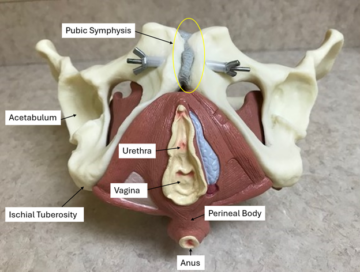
This is an image looking from the bottom of the female pelvis depicting the urethra, vaginal and anal orifices (openings) and pelvic floor muscles. Some of the bony structures to view are the pubic symphysis (at the top), the ischial tuberosity (at the outer bottom) and the acetabulum. The acetabulum or concavity in the pelvic bone is the socket where the head of the femur (hip) attaches. An appreciation of the hip in pelvic floor issues can be realized by looking at the anatomy. The proximity of the hip joint to the pelvic floor and the hip muscles crossing the pelvis create a relationship to the pelvic floor.

This image is looking from the top down and into the inside of the female pelvis. You can appreciate the connections from the front (pubis) to the back (sacrum) and the attachments of the pelvic floor muscles and the direct relationship to hip musculature such as the iliacus, psoas and piriformis. The psoas, a long tubular muscle adjacent to the iliacus (see the image below), connects the lumbar spine to the femur by going through the pelvis. Contributions by the psoas may have a large effect on the spine and pelvic floor.

Male Pelvic Floor Anatomy
The image below shows a model of the male pelvic floor looking from the bottom up. The yellow lines depict the pudendal nerve which arises from the sacrum and has input for sensation, muscle activity of the urethra and anus. This helps with control over the bladder and bowel. It also relays information of touch, pleasure and pain to the brain. The large grey ligaments on either side of the pelvic floor are the sacrotuberous ligaments which aide in stability to the pelvis and connect into the hamstrings and the posterior superior iliac spine (ilium/pelvis).

The image below demonstrates the male pelvic floor model looking from the top down inside the pelvis. The hammock nature of the pelvic floor muscles shows the support nature for the anus and urethra to help control the bowel and bladder. At the top of the image, the abdominals are connected to the pubis of the pelvis. The abdominal wall can affect the pelvic floor. For example, if there are trigger points or knots in the abdominal wall pain can be referred to the pelvic floor.

Knowledge of anatomy, particularly the pelvic floor, is important in understanding the connections to the rest of the body and the impact the pelvic floor may have on our body and how it may affect it. If you think you may have a pelvic floor problem, please discuss with your provider to see if pelvic floor physical therapy may be appropriate for you.
References and Further Reading
- Donnelly, J., Fernandez-de-las-Penas, C., & Finnegan, M. (2019). Myofascial Pain and Dysfunction: The Trigger Point Manual (3rd ed., pp. 487-495, 530-533). Wolters Kluwer.
- Ghanavatian, S., Leslie, S., & Derian, A. (2023). Pudendal Nerve Block. StatPearls. https://www.statpearls.com/articlelibrary/viewarticle/27998/
- Koch, L. (2012). The Psoas Book (1st ed.). Guinea Pig Publications.
- Pudendal Nerve. (2021, September 14). Cleveland Clinic. Retrieved April 3, 2024, from https://my.clevelandclinic.org/health/body/22000-pudendal-nerve
- Sacrotuberous Ligament. (2023, August 24). Physiopedia, . Retrieved 19:26, April 3, 2024 from https://www.physio-pedia.com/index.php?title=Sacrotuberous_Ligament&oldid=340406.